
Charlotte County Deed Records and Their Instrument Types
Charlotte County deed records hold every instrument the land-record system accepts. The clerk's office assigns each one a code or label. That local menu of document codes is not published online. Ask the Clerk to confirm a code before you rely on a search filter. A deed records a conveyance plus its legal description. Other instruments can create, transfer, release, or warn about interests in the same land, so a deed alone rarely explains every entry a title review needs.
| Deed Type | What It Does | Common Use |
|---|---|---|
| General or special warranty deed | Conveys the interest stated in the instrument; warranty terms differ. | Sale or other conveyance; read the promises in the deed. |
| Quitclaim deed | Transfers whatever interest the grantor holds, without a broad title warranty. | Family transfer, correction, or other limited conveyance. |
| Deed of bargain and sale | Records a conveyance under its stated terms. | Review its legal description and any referenced instrument. |
| Trustee or fiduciary deed | Shows a transfer by a trustee, executor, or other representative. | Estate, trust, or sale process; check authority in related records. |
| Corrective or boundary-line instrument | May amend a prior description or record an agreed boundary action. | Compare with the earlier deed and recorded plat. |
A deed of trust or a mortgage secures a loan. That is a different event from the conveyance that put an owner in title. An assignment can move a lender's interest. A certificate of satisfaction or release, by contrast, shows the debt was discharged. Judgments, construction liens, tax liens, easements, rights-of-way, restrictive covenants, and lis pendens notices may also live in the Clerk's land records. Some are easements. Some are liens or notices. Read each instrument with its recording reference. Match it to the legal description before drawing conclusions.
Virginia SRA Access to Charlotte County Deed Records
Virginia's Secure Remote Access service goes by SRA or COVERS. It is the statewide online entry point for local land-record indexes. A circuit-court clerk must enable access for the county. Free use may cover the index only. Images are limited to subscribers each clerk authorizes. Image access means contacting the local Clerk, signing an agreement, and paying applicable charges. A listing in the statewide system does not confirm that Charlotte has enabled a particular year or image.
The landing page lets you choose a court. It also shows the split between index-only and subscriber modes. Charlotte's own party-field labels, document menu, sort order, pagination, and image cutoff are not published. Start with a grantor or grantee name. Add a date range if those fields appear. Check any result against the Clerk's record before treating a summary line as the official instrument.
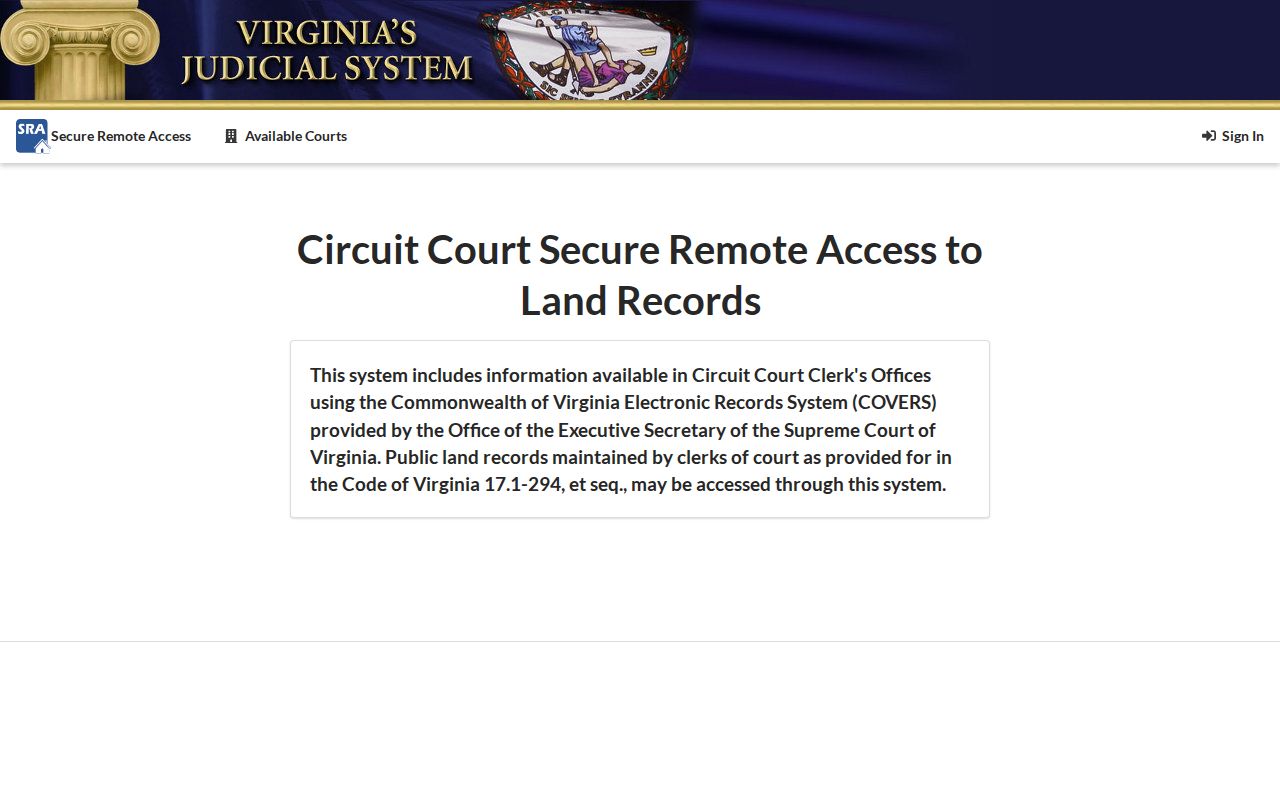
The Virginia SRA/COVERS land-record portal is the statewide entry point. It shows the service itself, not a Charlotte result.
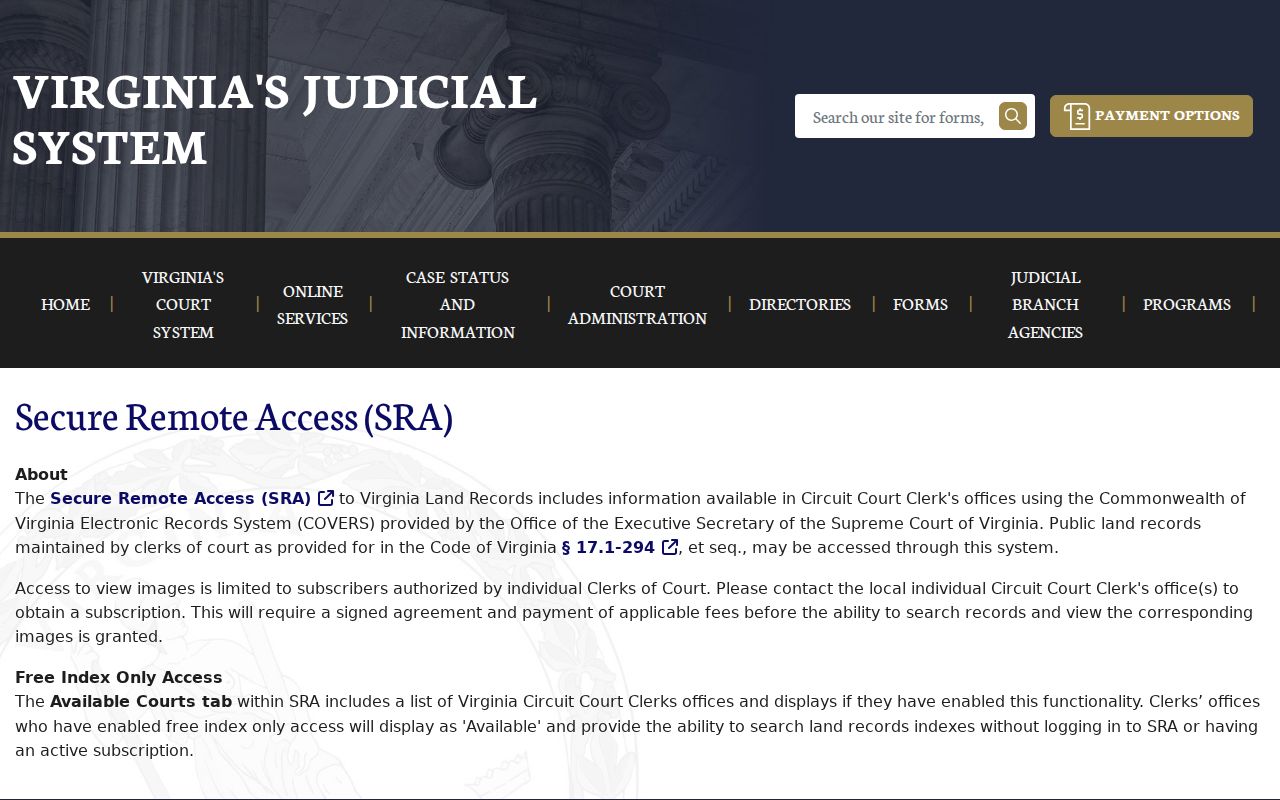
Virginia Courts' SRA access explanation covers index versus image access statewide.
Before paying for a subscription or traveling to the counter, ask the Charlotte Clerk which years and image types are currently available. That answer saves the trip.
Charlotte County Deed Records Need Both Party Roles
Virginia land indexes usually organize a transfer around two roles. The grantor conveys an interest; the grantee receives it. Charlotte's own SRA field labels should be checked in the live system. A chain of title is the ordered sequence of recorded instruments touching one legal description. Book-and-page references and instrument numbers are separate locator styles. Copy whichever the Clerk or system gives you. Do not convert one into the other.
- Start from the latest deed or assessment-card owner name, and search that party as a grantee.
- Read the instrument for the grantor, legal description, date, and any prior-book reference.
- Search the grantor as a grantee in the earlier period and compare the legal description again.
- Repeat through name variants, estates, trusts, and entities; ask the Clerk when an older book is needed.
This trail is a lead, not proof of unbroken or marketable title. Probate orders, fiduciary deeds, corrective instruments, parcel splits, and name changes can break a simple party-to-party path. Search the legal description alongside the names. Then verify the instrument itself.
The Charlotte County Online Deed Cutoff Is Not Published
Charlotte County publishes no confirmed earliest year for its secure remote access. It gives no stated image cutover. And it offers no word on whether older deed-book scans exist. So treat any index year you see as just that, an index year, not proof of the oldest deed in the courthouse. A neighboring Virginia county's cutoff tells you nothing here. If your search hits a wall, ask the Clerk directly which grantor and grantee books cover your year, whether the office keeps a public computer terminal, and whether indexes or books can be searched in person.
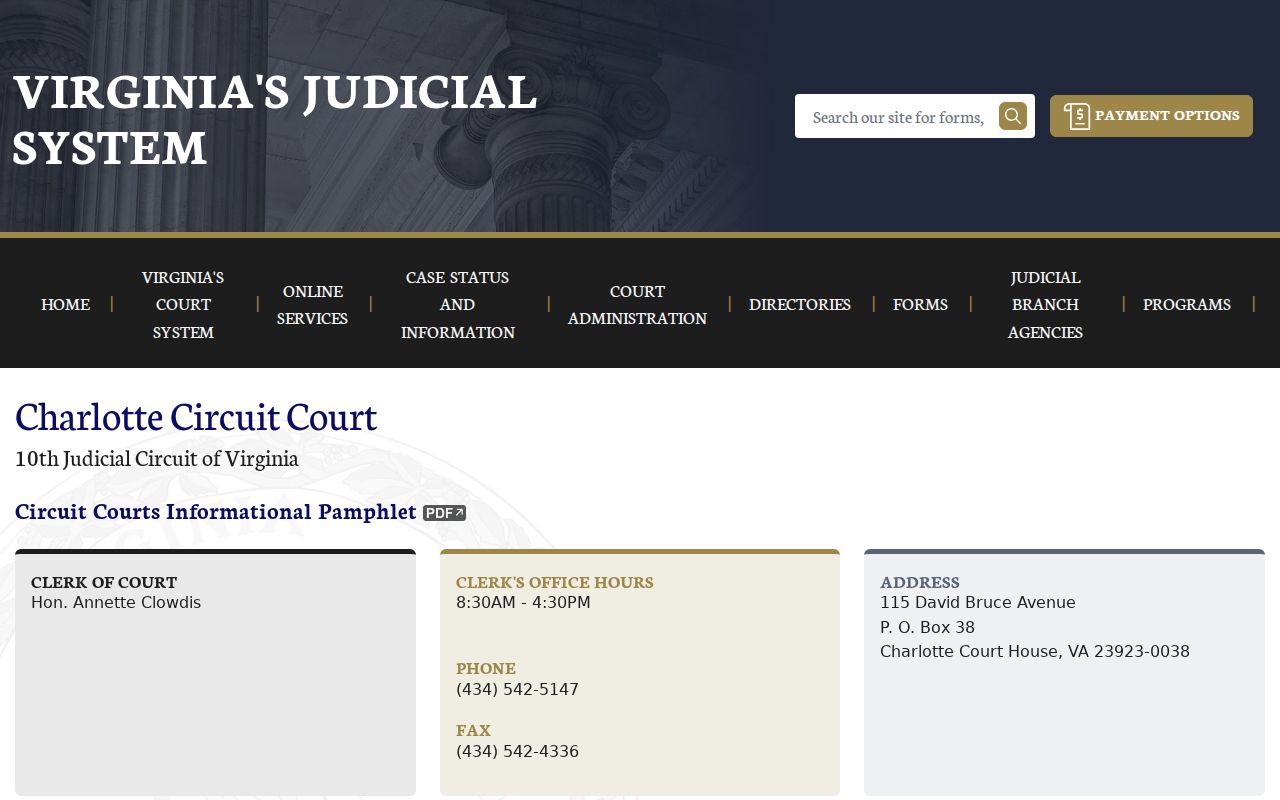
The Clerk sits at 115 David Bruce Avenue, P.O. Box 38, Charlotte Court House, VA 23923-0038, with a listed telephone of (434) 542-5147. Office hours run 8:30 a.m. to 4:30 p.m. Mail a request only after confirming the details. Will staff search by party name, legal description, or instrument number? Or do they need a book and page supplied up front? Confirm the certified-copy and research fees too.
The Charlotte Circuit Court page posts current clerk contacts and links to statewide court services. Treat it as an office reference rather than a land-record image source.
A request that names the parcel, parties, instrument, and date range gives the office a usable starting point. That is fair to both sides.
Order Books and Plats Add Context to Charlotte County Deed Records
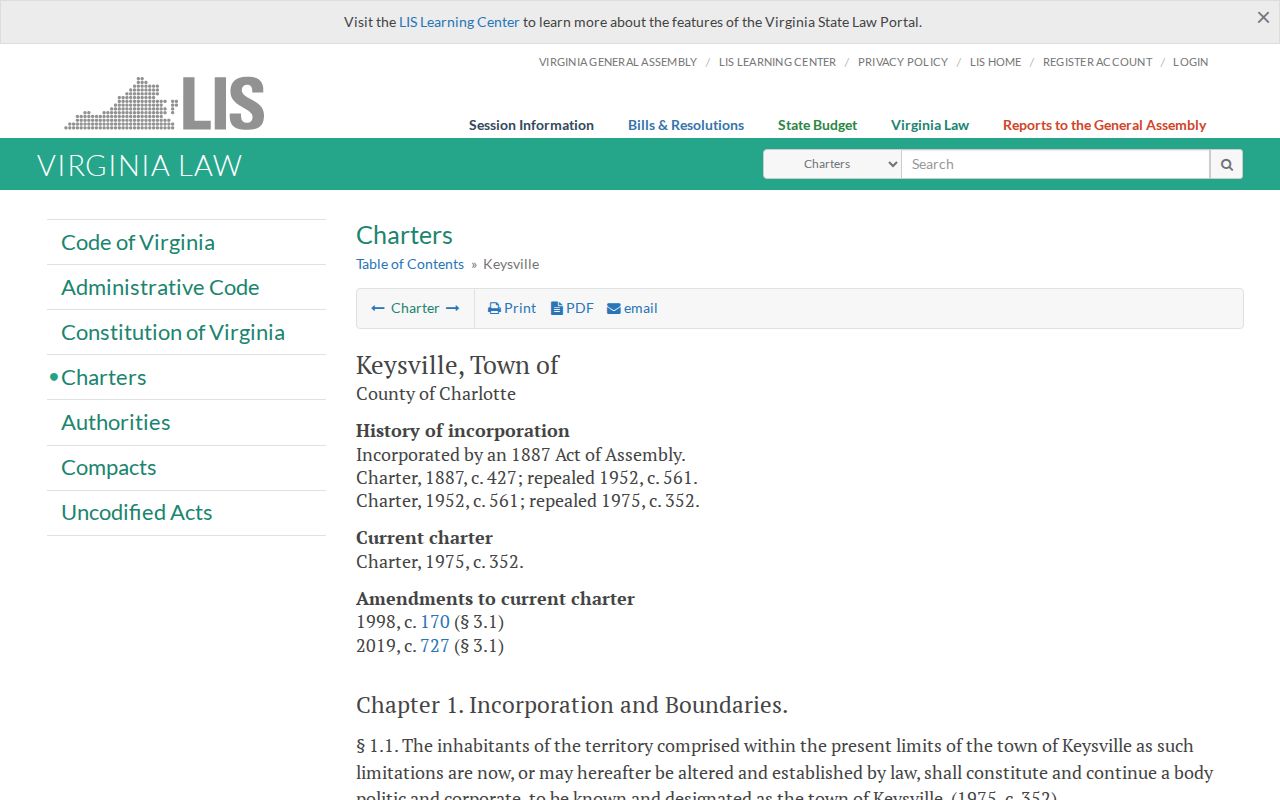
Charlotte County's land records reach beyond the deed books themselves. Order books sometimes hold the boundary references that deeds point back to. The Keysville charter text is a good example. It cites a town-boundary plat recorded in Common Law Order Book 18, page 83. That citation is a locator for one boundary record. It is not a general deed cutoff or a list of subdivisions. Some instruments cite an older plat or an order-book page. Copy the reference exactly and ask the Clerk which volume holds it.
Old addresses create a second puzzle. Modern road names and ZIP codes rarely appear in older instruments. The courthouse town went by many names before its present one. It appeared in records as The Magazine, Daltonsburgh, Marysville, and Smithville or Smithfield. Later it was Charlotte Courthouse and Charlotte Court House. Search those variants in a town history or a deed index. Then compare dates and legal descriptions before tying any result to a particular tract of land.
The Charlotte County Public Library maintains branches in Charlotte Court House, Keysville, Phenix, and Wylliesburg. Staff at any branch can help with older name variants. They may appear in local histories or newspaper indexes. Holdings vary by location, so ask before counting on deed indexes or city directories. The library's locations page lists the full branch network.
Branches are useful for historical leads. The official land instrument, though, stays with the Circuit Court Clerk.
Tracing a Charlotte County Deed Chain Backward
Work the chain in reverse. Start with a recent grantee, then move through that deed's grantor. Search the former owner as a grantee to learn how that party acquired the parcel. Keep stepping back one transfer at a time. At each link, test the legal description. Confirm the deed still covers the same tract. Some deeds name an estate, a trustee, or several heirs instead of one buyer. In those cases, search every named party. Do not stop at the last individual on the property card.
- Find the latest deed that appears to cover the parcel and record its parties and legal description.
- Use the grantee's acquisition instrument to identify the prior grantor.
- Search that grantor as a grantee in an earlier period and compare the tract description.
- Continue until the chain reaches a different parcel, a record gap, or a clerk-held older book.
- Grantor
- The party conveying the stated interest in the instrument.
- Grantee
- The party receiving the stated interest.
- Chain of title
- The sequence of recorded conveyances and related instruments for a tract.
- Book/page and instrument number
- Different clerk or system locators; preserve the one printed on the record.
Separate Conveyances from Liens in Charlotte County Deed Records
Ownership deeds are only part of the record. A deed of trust secures a loan. An assignment moves an interest, while a certificate of satisfaction or release records a discharge. A lis pendens flags pending litigation. Judgments and construction liens can attach to the land. Easements, rights-of-way, and covenants can shape its use without transferring ownership. When the question concerns an encumbrance, search by owner and also by lender, claimant, trustee, or association name.
A foreclosure question calls for side-by-side reading. Compare the deed of trust, any court case or notice, and the later trustee's deed or other recorded conveyance. A foreclosure notice or lawsuit alone does not prove title changed hands. For taxes, the Treasurer can report a balance. But a recorded lien or a completed sale instrument belongs in the Clerk's records. Charlotte's public pages post no searchable tax-sale roster. So ask the Treasurer or Clerk for the current source before relying on a sale notice. Federal bankruptcy or property litigation may require a separate docket search through PACER. A federal case adds context, but the land transfer still needs confirmation in the county record.
An index hit settles nothing by itself. Review the instrument and any later release before drawing conclusions about priority, enforceability, or a current payoff.
Estate and Business Names Can Change a Charlotte County Deed Search
Not every link in a chain runs between a simple buyer and seller. Some pass through an executor, administrator, trustee, estate, or heirs. Charlotte Circuit Court's fiduciary function is the local starting point for wills, estate orders, qualification records, and commissioner or fiduciary deeds. After a death transfer, a property card may show an estate, trust, or representative name. Confirm the land record through the actual fiduciary instrument or order, never an obituary alone.
Business names raise a different issue. When a deed names an LLC, the Virginia State Corporation Commission's Clerk's Information System can identify the entity's filed name and registered agent. That agent is not necessarily the beneficial owner. Search the exact company wording in the deed index. Compare the entity's name across assignments or later conveyances. For an estate file, bring the decedent's name, the estate number if known, and the parcel description. The Clerk's office can explain which probate record family applies. It can also explain how to make the request. No request form or fee schedule appears on the county's pages, so ask about copy charges when you call.
Getting a Copy of a Charlotte County Deed
If SRA shows an image and the clerk has authorized your access, save the instrument reference. Compare the image against the index entry. Otherwise, contact or visit the Circuit Court Clerk. Give the staff the grantor and grantee names, the approximate record date, and any parcel or map reference. Add the exact book and page or instrument number when you have it. Ask whether the office can search a legal description. Also ask which copy types exist and how payment and delivery work.
Virginia sets recording fees by statute, but a recording fee is not a copy charge. Confirm research, plain copy, certified copy, and mailing costs directly with the office. The Circuit Court page lists the Clerk's contact information and office hours. So call ahead about current service, appointments, and payment methods. If the record is not online, ask about older books and indexes. Also ask about access to the public terminal.
Recorded, not guaranteed. A Charlotte County deed index shows entries held by the Clerk, not every possible interest in land. It is not a title opinion; unrecorded interests and later instruments may matter, so use a qualified title professional for a legal conclusion.