
The Charlotte County Current Owner Entry and Its Fields
Charlotte County points property owners to its property-card sites as the source for assessment records. Field labels can vary. Inspect the live card. Write down the exact words it uses. Treat any field list as a verification inventory rather than a promise that every item appears on each parcel, and keep the portal and effective period beside any value or owner name you quote.
| Owner caption | Verify the exact owner-of-record label in the live Charlotte County card. |
|---|---|
| Mailing address | Tax-notice destination; may differ from the parcel's physical location. |
| Situs or location | Physical parcel reference; preserve its wording and road form. |
| Record, account, map | Copy each identifier and its label; they are distinct keys. |
| Deed or instrument | Confirm any displayed reference against the Clerk's recorded document. |
| Effective period | Note whether the value came from the current or 2025 reassessment portal. |
An assessment owner is not the same as a person living at the address. The two facts differ. A mailing address is simply where the tax notice is directed, and it may belong to an owner who lives elsewhere, an agent, or an organization. It is a contact route, not proof of occupancy or identity.
Current and 2025 Charlotte County Owner Cards Are Separate
Charlotte County keeps two property-card sites. One covers current cards. The other holds the 2025 reassessment cards. Both portals offer Record, Account, Map, Name, Location, and Address search modes. The reassessment page adds Instrument Number and Subdivision where available. Because the datasets differ, use the current card for today's administrative view and the 2025 reassessment card for values effective July 1, 2025.
This split helps when checking a reassessment notice. A gap between the two cards is not a transfer. Note the date, portal, identifier, and exact owner caption. The county publishes no typical deed-to-card update interval. Ask the Commissioner how a recently recorded sale enters the roll. The current card site and the 2025 reassessment site are separate entry points.
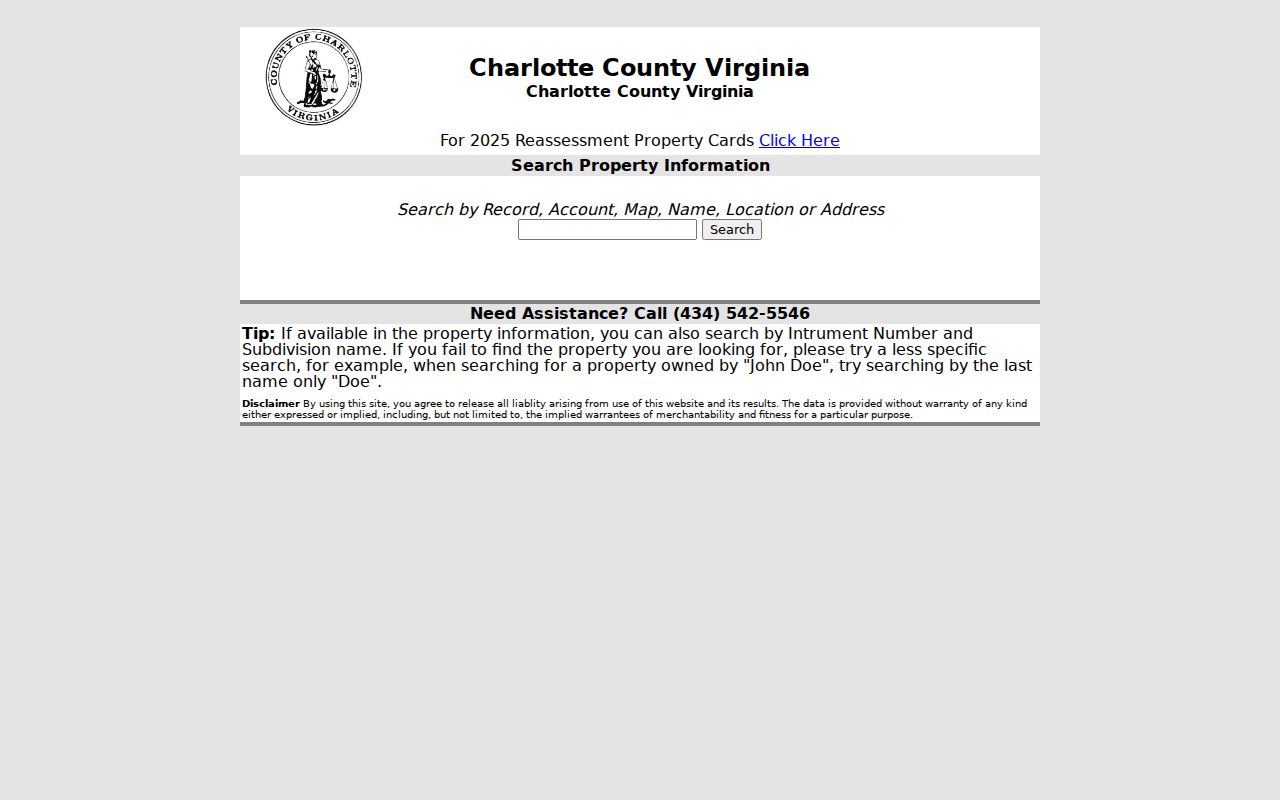
The current-card page shows search modes, not one parcel's owner field. The separate reassessment-card site lists the 2025 choices.
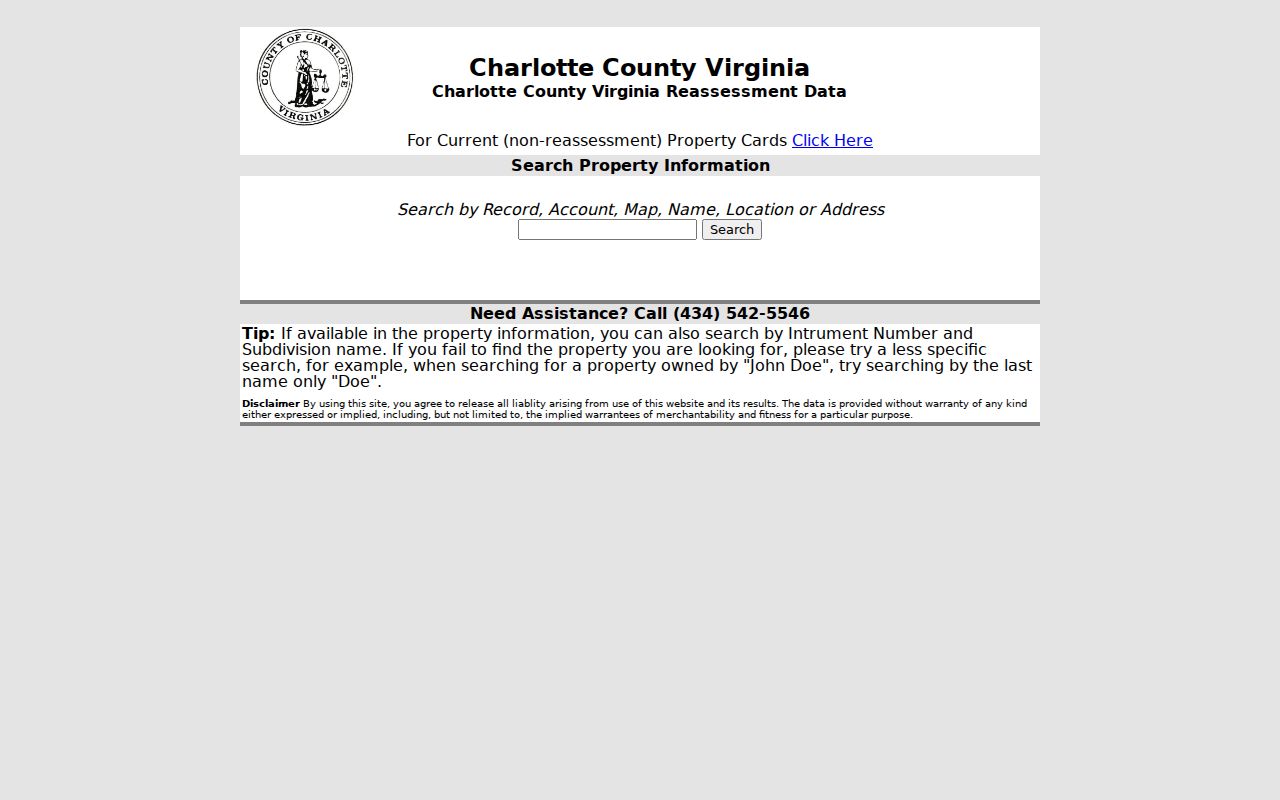
Keep the two screenshots' sources distinct when comparing owner or value information.
Confirming the Current Owner in Charlotte County Records
For a recent transfer, the recorded deed settles the question. Start with the assessment entry. It identifies a candidate owner and parcel. Then search the newest deed under the grantee name in Virginia SRA, provided Charlotte Circuit Court access is enabled. Compare the grantee, recording date, and legal description. If the online index is unavailable or the image requires a subscription, ask the Circuit Clerk about counter access and the copy process.
- Search the current card by address or a printed Map, Account, or Record number.
- Record the card's exact owner caption, portal, and effective period.
- Search the latest deed by grantee in SRA, if Charlotte is enabled, or contact the Clerk.
- Compare the deed's legal description to the parcel card before calling the transfer a match.
- Owner of record
- The name shown in a particular public record, which may be updated on a different schedule from a deed.
- Vesting
- The form in which the recorded deed holds the interest.
- Registered agent
- A formal business contact; that role alone does not prove beneficial ownership of land.
A Recent Charlotte County Deed Can Be Newer Than the Tax Roll
The county's source gives the 2025 assessment effective date but no average lag between a deed recording and a card update. A card may still name a prior owner. Check the latest recorded deed. Ask the Commissioner when the parcel card gets refreshed. A blank owner result does not mean no sale was recorded.
Virginia's SRA terms split access in two. A free index is open. Document images require a subscription and local clerk authorization. The Clerk remains custodian even when the index is searchable online. Charlotte-specific availability, image coverage, and the oldest searchable year are not published, so confirm details locally. The Clerk's office sits at 115 David Bruce Avenue in Charlotte Court House, phone (434) 542-5147. The statewide SRA guidance describes these access modes; the rule page is not proof of access to a specific Charlotte deed.
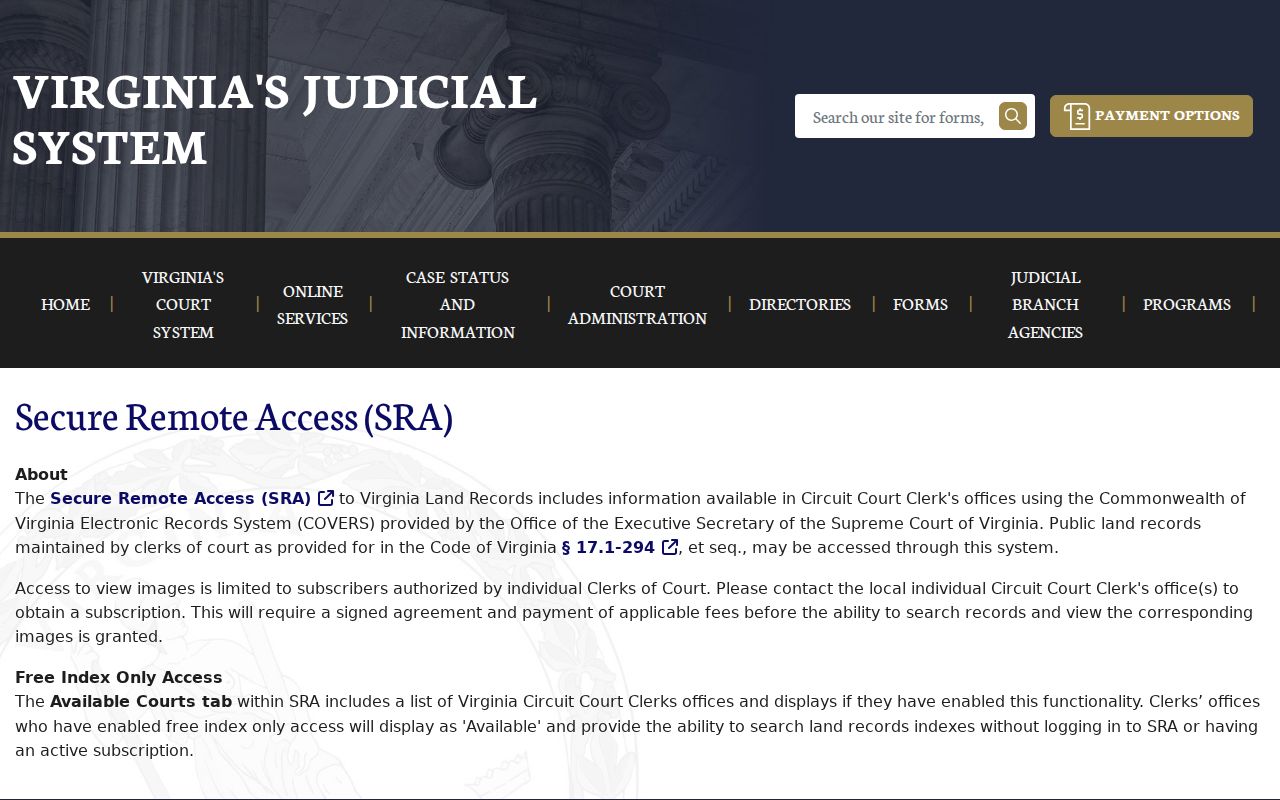
Ask the Clerk for the current local index cutoff before trusting an online result. Also confirm image options.
Entity Names on a Charlotte County Current Owner Record
A current owner entry may name a company, trustee, estate, or representative. Copy the name exactly as printed. For an LLC, the Virginia SCC business lookup supplies filed entity information and a registered agent. That agent may not control the land. Search the LLC's own name in the land index. Then read the deed's vesting clause.
Deaths complicate the picture. A card can lag a death transfer or show a trust or representative name. The Charlotte Circuit Court Clerk's fiduciary and probate function holds wills, orders, and representative deeds. The better record is the deed or distribution order. An obituary is a lead for names and dates, not title proof.
Never guess who stands behind an entity. Use the business or probate record to understand the recorded party. Then stop there. The land question sets the limit on what public information you need.
Mailing and Situs Fields in Charlotte County Owner Records
Every Charlotte County owner record carries two addresses. The situs field pinpoints the parcel itself. The mailing field shows where assessment notices and tax bills go. It can sit far outside Charlotte County. Neither field proves who actually lives there. Address formats cause trouble too. Rural route names, punctuation, and road labels often differ. A bill and a property card may not match. When an address search misses, simplify the road name. You can also fall back on the map key.
The Commissioner of the Revenue keeps the card portals and tax maps. The office sits at 205 David Bruce Avenue in Charlotte Court House. The phone is (434) 542-5546. Staff can explain the exact owner field. They can also show how a recorded deed flows into the current tax roll. Charlotte County publishes no local rule for redacting owner addresses. Ask the custodian directly for current privacy guidance. The assessor's official office page links its property-card resources and contact information.
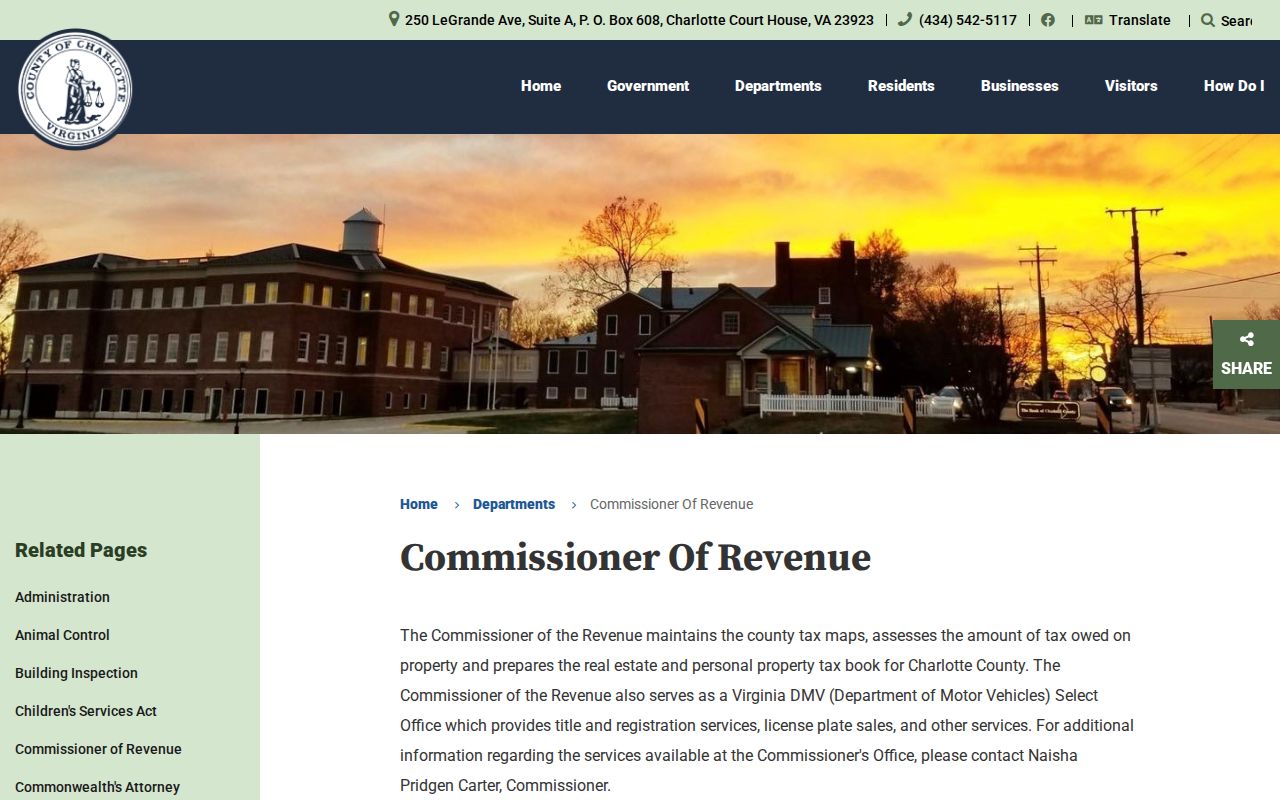
For a single-property question, keep it narrow. Cite the public mailing field only when it matters to a legitimate property issue.
Contact and Limits for a Charlotte County Current Owner Search
An assessment roll identifies a record entry. It is not an invitation to expose private details. Virginia records are generally public, though exemptions and protected information still apply. Charlotte County posts no redaction policy online. The exact address-confidentiality procedure is not spelled out publicly. Ask the custodian what may be released. Avoid copying signatures, full financial identifiers, or sensitive personal details from a land image.
If the goal is simply naming the present owner of record, compare the current card with the latest deed. Note the result date. The Charlotte County owner-finding guide traces the broader route from an address to the owner. For a recorded transfer, review the instrument itself rather than repeating the general property search.
Lawful use. Use current-owner information for property diligence and other lawful purposes. Do not use it to stalk, threaten, impersonate, or harass anyone, and respect information the custodian protects.