
Find Out Who Owns a Charlotte County Property
Finding the owner is a handoff, not a single database. Search a known situs address in the current property-card portal. If the value question ties to the 2025 reassessment cycle, use the separate reassessment portal instead. Copy what the site shows. Record the owner field and mailing address. Record the Map/Account/Record number and legal description exactly as the site presents them. Then use the GIS map to confirm the parcel. Finish with the Clerk's land-record index to confirm the latest deed.
- Search the current card site by address, then try a simplified road name if there is no match.
- Copy the owner name and parcel identifiers; note whether the current or 2025 card produced them.
- Compare the parcel's location in the county-linked GIS viewer.
- Search the latest deed in Virginia SRA if Charlotte is available, or ask the Circuit Clerk.
- For an entity name, check the Virginia SCC filing as a clue, not as proof of land ownership.
The Charlotte County Card Gives an Owner Lead, Not a Title Opinion
Charlotte County's current and reassessment property-card sites offer several search modes: owner, address, location, map, account, and record. Owner search is the obvious draw. Labels on individual results vary. Open the actual record. Note the displayed owner caption, the date, and which portal you used. A recent conveyance recorded but not yet reflected in the assessment system leaves the deed as the later evidence of the transfer.
The reassessment site suggests a fallback. Try a less-specific owner name when a full name returns nothing. A surname casts a wider net but can also return people who share the name, so separate matches with the parcel description, street context, or map key. Do not assume the person receiving tax mail occupies the parcel, or that every co-owner appears in a short search result.
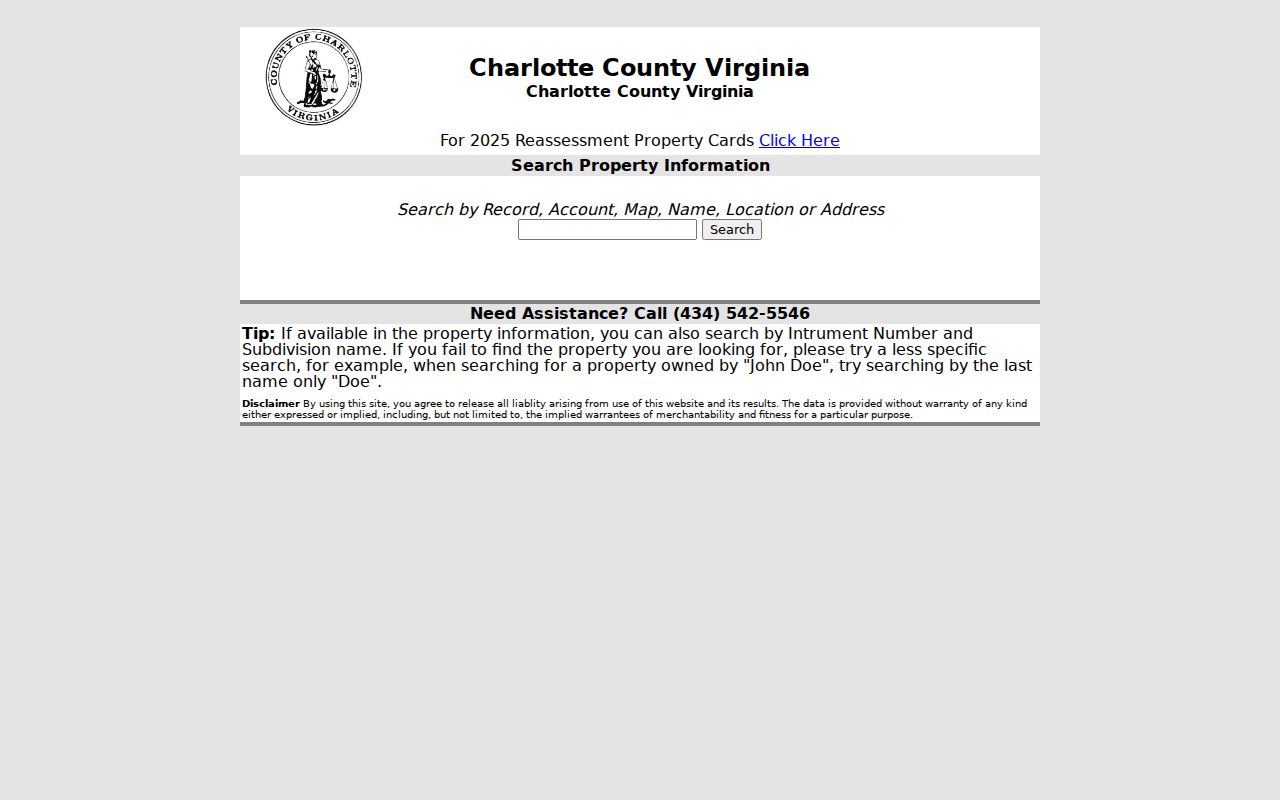
The current card portal shows the query options before any search begins. It lays out the choices plainly. That display backs the search route. No particular owner appears there.
Once you have a candidate parcel, carry its identifiers forward. Repeating a broad name search at every office only muddies the trail.
A Recorded Deed Confirms Charlotte County Property Ownership
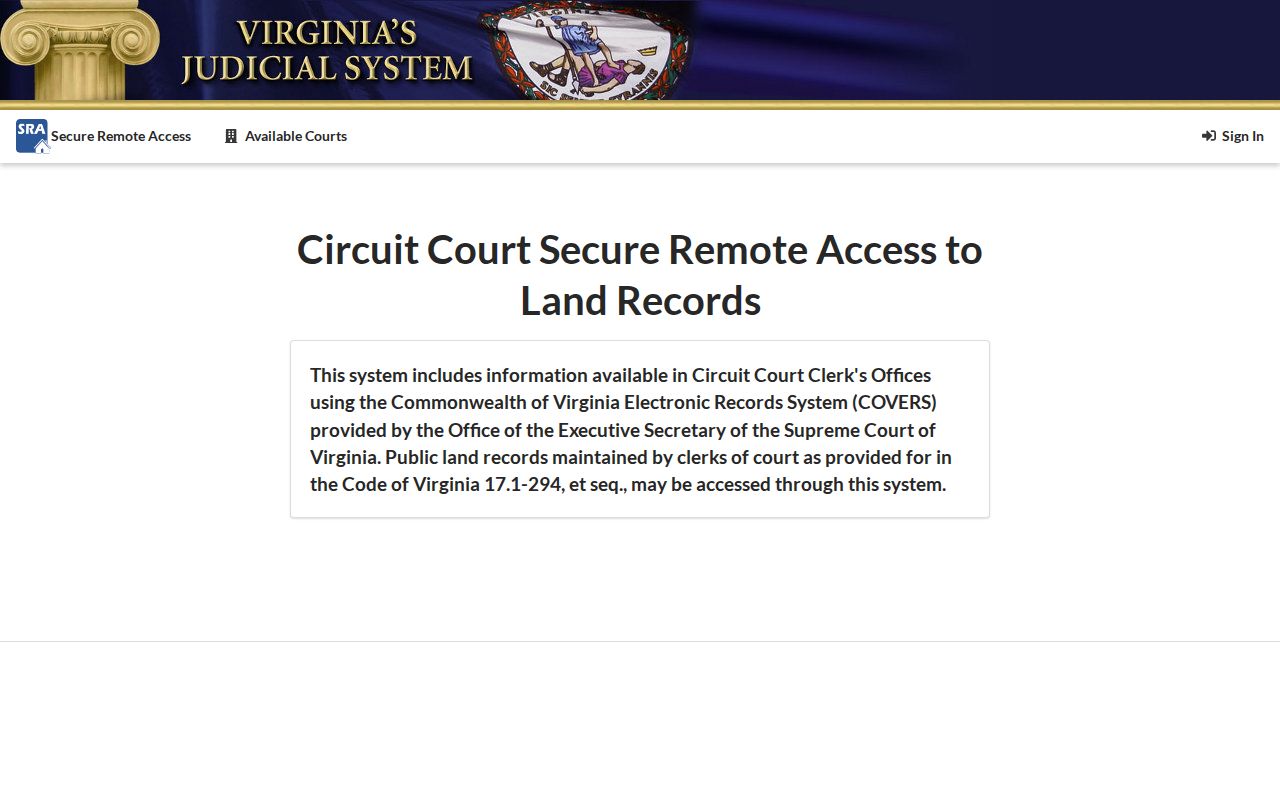
A deed is the paper trail that settles who owns a parcel in Charlotte County. The assessor's tax card may name an owner of record. But the Circuit Court Clerk holds the recorded conveyance itself. Virginia's SRA/COVERS system is the statewide route when Charlotte Circuit Court is available there. Run the candidate owner as grantee. Then read the instrument parties and the legal description closely. The statewide portal may allow free index access. Document images, though, generally require clerk-authorized subscriber access. Charlotte's exact index cutoff and online image coverage remain unclear.
When SRA turns up nothing, call the Clerk at 115 David Bruce Avenue, P.O. Box 38, Charlotte Court House, VA 23923-0038, (434) 542-5147. Ask about the public terminal, the paper indexes, and the older deed books. Search grantor and grantee forms alike, and watch for estate, trustee, married-name, and company variants. Keep in mind that a recent deed can supersede the tax-card owner entry. The county publishes no average deed-to-roll update lag.
The Virginia SRA land-record service is the statewide path into these deed records. The clerk remains Charlotte County's records custodian.
Confirm local availability and copy options with the Circuit Clerk before relying on an online hit. A single result is rarely the whole record.
When a Charlotte County Property Owner Is an Entity
A deed or assessment card may name an LLC, trust, estate, trustee, executor, or several heirs. The owner of record may not be one person. Preserve the legal name exactly as written. The Virginia State Corporation Commission's Clerk's Information System helps here. It can reveal an LLC's registered agent or principal office. But those details prove neither who benefits from the company nor who owns a given parcel. Search the entity name in the land index. Compare it with the deed's grantee field.
Death transfers need the fiduciary side. Charlotte Circuit Court's fiduciary records can hold a will, order, or representative deed. These can explain how title moved. The property card may lag. It may also carry an estate or representative name. Use the decedent's name and estate number if known. Then compare the fiduciary document with the recorded land instrument. An obituary or cemetery notice can point to a name, but it is not title evidence.
The right question matters. Ask which legal person or entity appears in the recorded conveyance. Do not ask which individual is associated with an entity filing. That framing avoids dead ends.
Mailing and Situs Fields Are Different Owner Clues
A situs or location field points to the physical parcel. A mailing address is different. It tells you where a tax notice goes. That may be the owner, a representative, a lender, or an out-of-county location. Those fields can differ without any error. For rural property, try the road name without punctuation. You can also try a route-address variant, or the map and account key from a notice.
Never treat a mailing address as a home address. It proves no one occupies the property. Use it only for the lawful property question at hand, and ask the Commissioner how address corrections are handled. The county offers no documented owner-contact service or privacy-redaction policy for card results.
Where Charlotte County Owner Information Comes From
Charlotte County owner information lives in several different places. The assessment card names the county's current administrative entry for a parcel. The recorded deed shows the conveyance itself. GIS orients the tract spatially. The SCC entity system adds limited business filing context, though it is not a land registry.
| Source | Owner Info It Gives | Access |
|---|---|---|
| Commissioner property cards | County owner-of-record entry and parcel identifiers; exact result labels need live review. | Current and 2025 reassessment portals |
| Circuit Clerk land records | Grantee and grantor on recorded deeds and related instruments. | SRA if enabled; Clerk counter or request |
| County GIS tax map | Parcel geography; popup details and tools were not captured. | County-linked viewer or Commissioner |
| Virginia SCC entity system | Filed company name and registered-agent context, not beneficial ownership of land. | State business search |
Start with the labels. An owner of record is the party a public source names in its record. A grantee is the recipient named in a conveyance. Vesting describes how the deed holds title. Situs is the parcel location; the mailing address is just a destination. None of these labels identifies an occupant. A public record supports property due diligence. It cannot establish who lives inside a building.
Charlotte County Property Ownership Can Look Different Across Portals
Portals disagree more often than you might expect. The county's current and 2025 assessment cards are separate datasets. The latest deed may show a transfer that has not yet reached the tax roll. Charlotte County publishes no fixed update interval, so a lag is normal. Record the instrument date and the card's effective period. Then ask the Commissioner whether a just-recorded instrument has been incorporated. A mismatch is a reason to check the source date. It is not a reason to assume fraud or error.
The GIS viewer helps separate two parcels with similar addresses. Its popups and owner fields are not authoritative. Search the card's Map mode or use a tax notice when possible. The county-linked GIS map is a spatial aid. The clerk-held deed remains the place to confirm a transfer.
For the 2025 cycle, the county gives an effective date of July 1, 2025. It links a reassessment card separately. Keep that date in mind when explaining why a card's number differs from a bill or an earlier record.
Limits of a Charlotte County Owner Lookup
Every lookup has edges. An owner lookup does not identify occupants, establish beneficial ownership behind an entity, confirm every interest affecting title, or reveal a private person's current whereabouts. Virginia public-record laws allow broad access but also recognize exemptions and protected information. Ask the custodian what is withheld before copying a record image.
Remember what each source actually is. A card is an assessment source. A deed is an instrument. A GIS line is a tax-map shape. For a legal ownership conclusion, review the complete record chain with a title professional. For a parcel boundary, consult the recorded plat and a surveyor. Do not publish signatures, sensitive identifiers, or details the custodian has protected.
Lawful use. Use owner information for property research, purchase diligence, and civic purposes. Do not use it to stalk, threaten, impersonate, or harass anyone, and respect protected information.