
Charlotte County Property Value Has More Than One Meaning
Every value figure has a source and a purpose. Virginia law assesses real property at 100% of fair market value, and Charlotte County's property card is an administrative estimate built for taxation, not a market certificate. A recorded deed states a sale price. A private appraisal is a separate professional opinion with its own stated purpose. Landing pages do not show every value field. Open the parcel's own card before trusting any single number.
| Value | What It Is | Where |
|---|---|---|
| Assessed value | County value for the real-estate tax system, based on a fair-market-value standard. | Commissioner property card |
| Market value | A current estimate of likely exchange value; not established by a tax card alone. | Appraisal or market analysis, not a deed index |
| Recorded sale price | Consideration or price tied to a particular conveyance, if stated in the record. | Recorded deed or instrument; verify the actual document |
| Land and improvements | Separate assessment components if shown on the individual card. | Inspect the live county assessment record |
Virginia's full-market-value standard gives the assessment a stated goal. It still serves taxation. A deed may state a consideration, yet that single sale can reflect timing, property condition, and the terms of the transfer. So the assessment certifies no sale price. Keep each record's date and purpose beside every number you compare.
The 2025 Charlotte County Property Value Reassessment
Charlotte County's latest reassessment took effect July 1, 2025. The prior one dated to July 1, 2019. The county follows a six-year cycle and names Pearson's Appraisal Services as the contractor. Values follow that cycle, not the market. So check the effective date before comparing a card with a deed or an older bill. The county notice reported broad shifts by category. Site-built and modular homes generally rose 50% to 65%. Doublewides climbed as much as 70%. Land increased 30% to 50%, and commercial or industrial property gained 10% to 20%. Those ranges describe whole categories. No parcel estimate is implied, and one property can differ based on its own record and features, so confirm it in the live card and notice. The county's official reassessment page publishes the dated figures and review information.
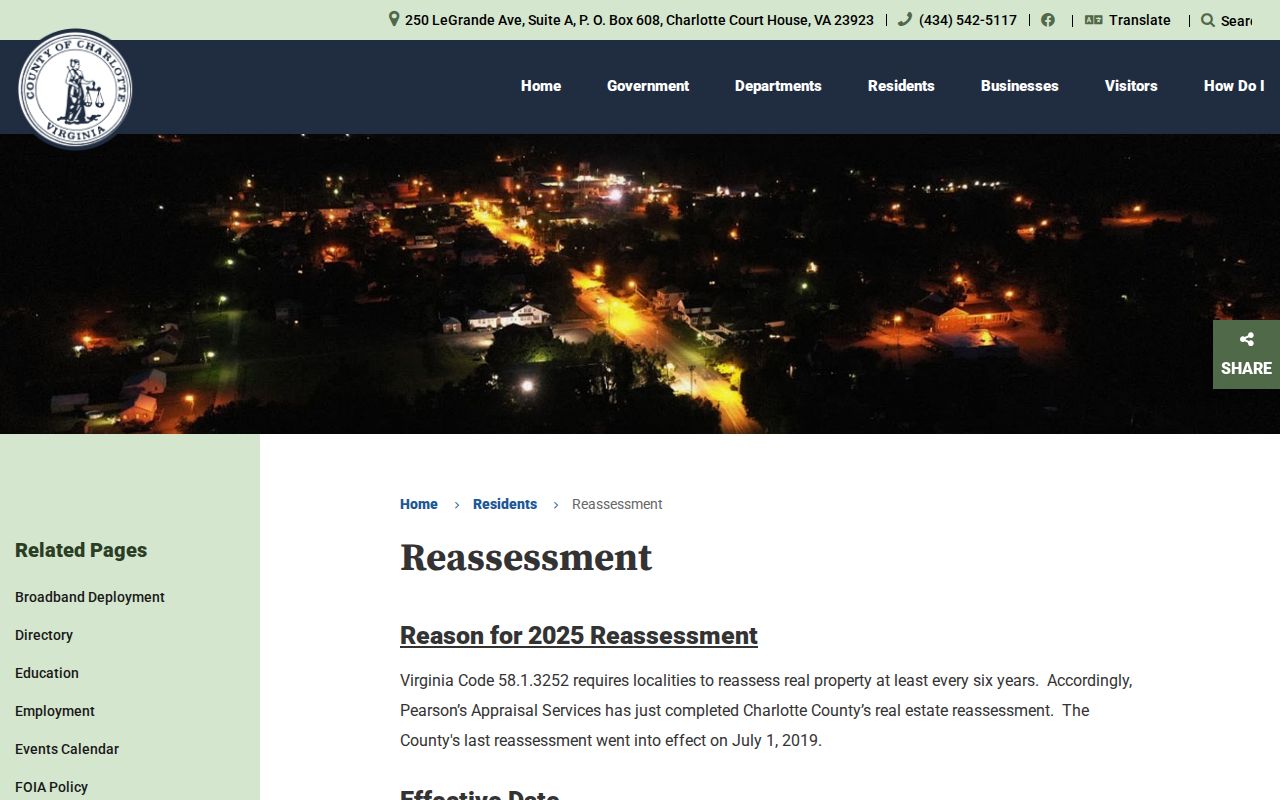
Treat these figures as countywide category ranges only. They cannot replace a parcel's actual assessment on the tax roll.
Current and Reassessment Portals Show Different Charlotte County Values
The county links two card sites. One covers current records; the other holds the 2025 reassessment cards. Both search by Record, Account, Map, Name, Location, or Address. The reassessment site adds Instrument Number and Subdivision where available. Choosing the right portal matters, since each dataset carries its own effective period. Landing pages do not display every result field. Open the individual card. Look for a single total. Look for a land and improvement split. Look for an effective date or an exemption entry. A missing field on the landing page does not mean it is absent. The field may still appear in the record itself. The Commissioner's office can explain which view applies. Use the current card portal and the separate 2025 reassessment search as distinct tools.
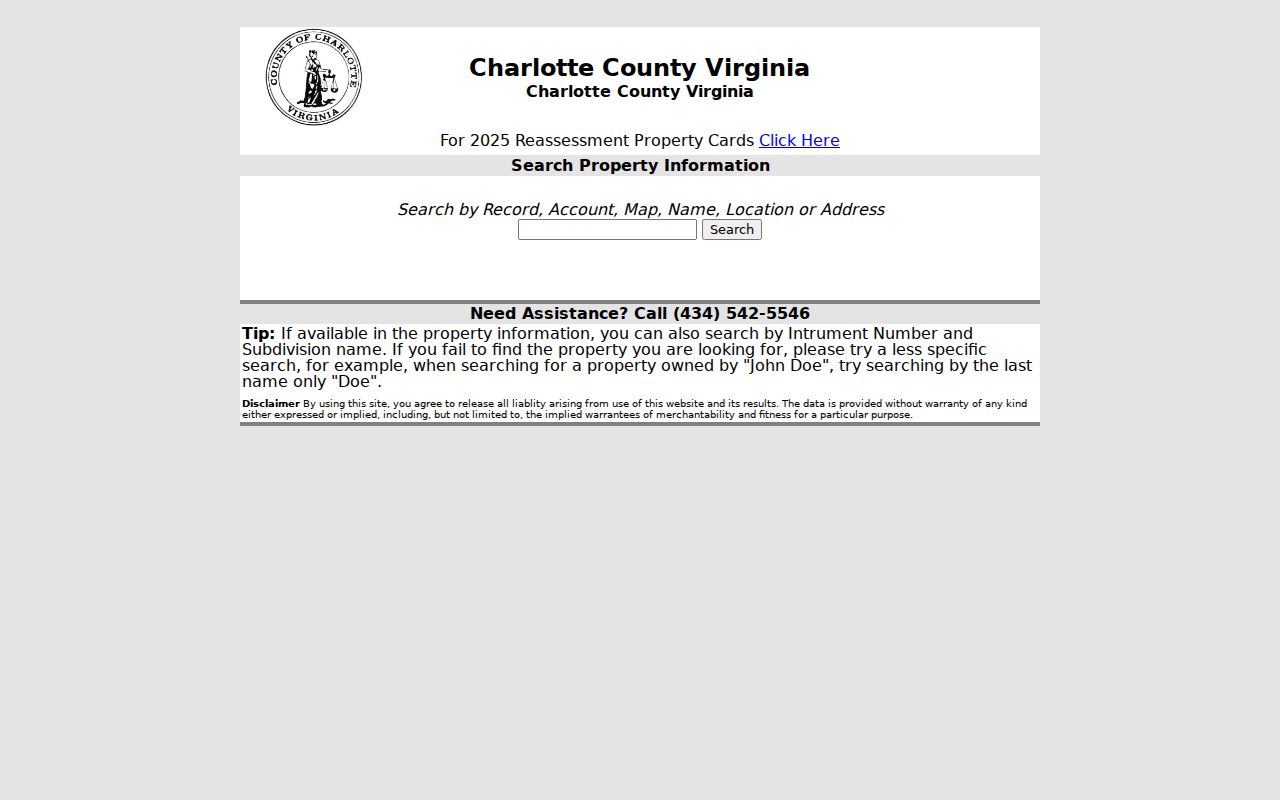
The 2025 portal also offers a broader name-search tip that can help locate a hard-to-find reassessment record. The 2025 reassessment portal lists its search modes.
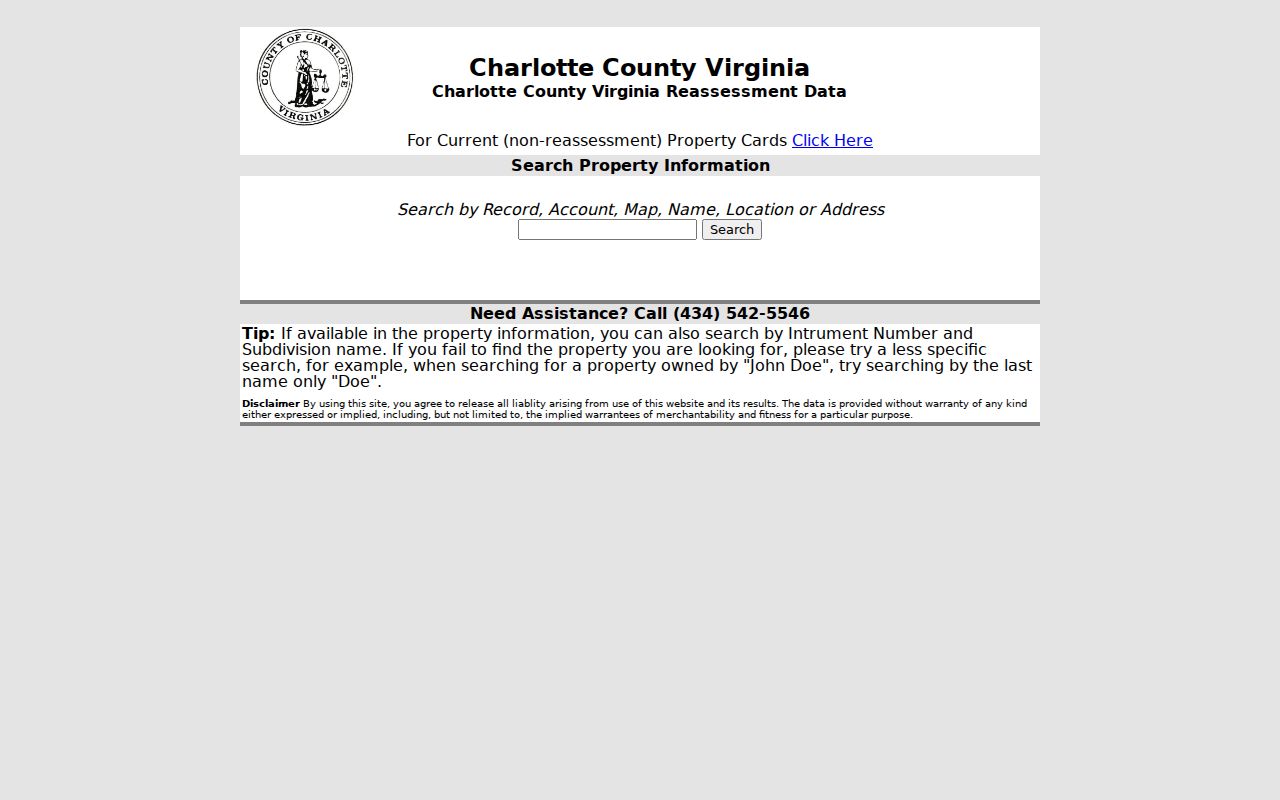
Note which portal supplied each figure. Otherwise a current tax card may be mistaken for a reassessment card.
Looking Up a Charlotte County Property Value
Match the source to the question. The Commissioner's card holds the county assessment entry. A deed is the record to review for a sale. Landing pages show search modes, not every parcel result. Start from a known address or the number on a tax notice. Keep the exact label and portal name beside any value you save.
- Search the current card or the 2025 reassessment site by address, location, owner, map, account, or record.
- Record the actual value label, source portal, and effective period shown for the parcel.
- Use the Circuit Clerk's recorded deed if the question concerns sale consideration or a transfer.
- Ask the Commissioner to explain an unclear field instead of treating the card as an appraisal.
- Assessed value
- The county's tax-assessment figure for the stated cycle.
- Fair market value standard
- Virginia's real-property assessment target is 100% of fair market value.
- Recorded consideration
- The amount or terms connected to a particular recorded conveyance, if present.
- Reassessment
- A new countywide value cycle; Charlotte's latest values took effect July 1, 2025.
Charlotte County's $0.41 Rate Is Not a Property Value
When the 2025 reassessment took effect, the county cut its real-estate rate from $0.62 to $0.41 per $100 of assessed value. Officials aimed to collect no more than 1% more real-estate revenue than the prior year. That is tax policy, not valuation. A rate shows how a value is used. It cannot state what one parcel would sell for. Keep three questions apart. What value did the Commissioner assign? What rate applies to the tax year? What bill did the Treasurer calculate? A rate change does not erase a value increase, and a category-wide percentage will not predict one owner's bill change. Use the current bill and the parcel's own assessment for that math. The county's tax information page reports the current rate and collection details.
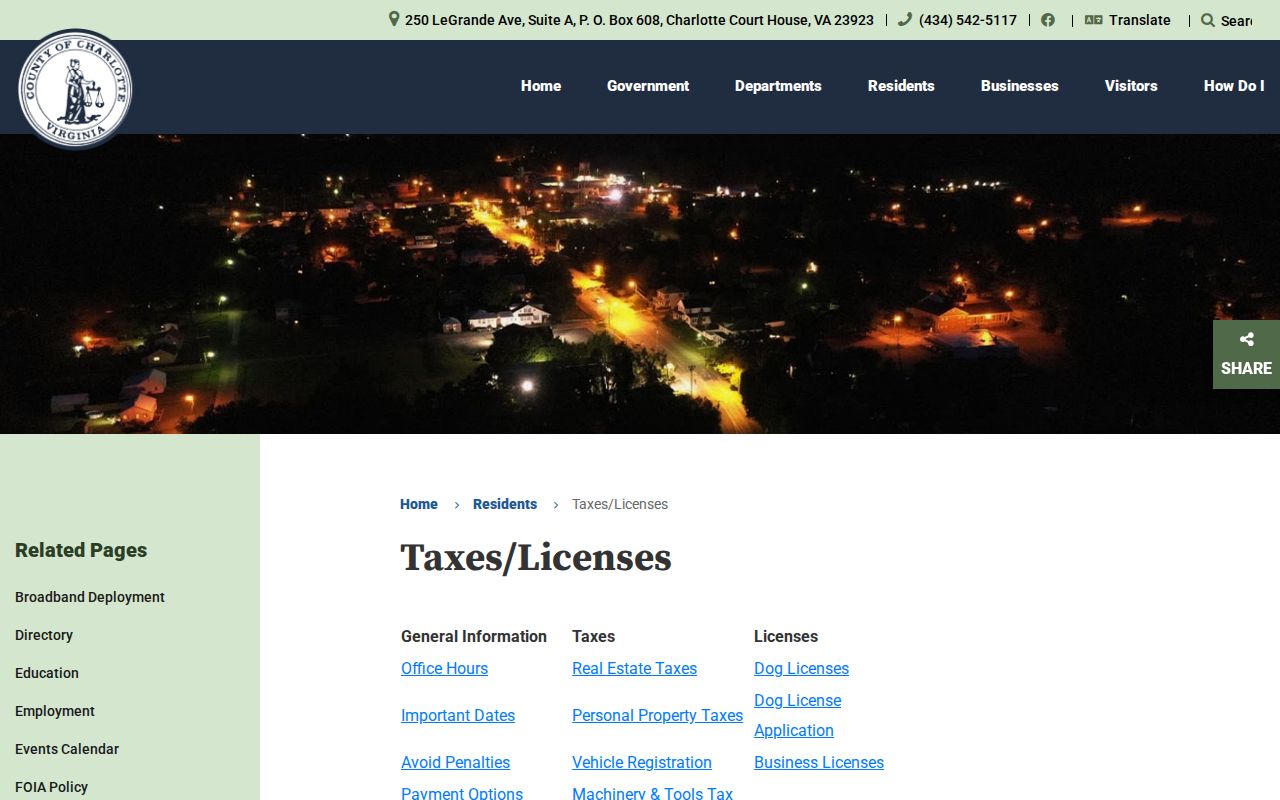
For bill dates, exemptions, and the appeal route, see the county tax-record guide. A tax rate is guidance, not market evidence.
Sale Data and Charlotte County Property Value Are Different Records
A recorded deed in Charlotte County may state what a buyer paid, but the property card does not guarantee a last sale date, amount, or instrument link for every parcel. Read the deed itself. Ask the Clerk for the underlying record. A sale price proves one transaction on one date, nothing more. It does not appraise a neighboring property or prove the current condition of the same one.
When a card does show sale fields, check the instrument number and legal description against the deed. Mismatches happen. A parcel split, a partial conveyance, or a family transfer can all explain the gap. Treat every recorded transfer with care. Some transfers were never open-market sales at all. The county publishes no sample parcel result or official field list, so confirm field names against the live card before relying on them.
Land, Improvements, and Exemptions in a Charlotte County Value
A Charlotte County property card may break value into parts. But the full parcel-level field list is not published. When land and improvement values appear, keep both figures and the total. Quote one line alone and the number loses meaning. Characteristics can explain how an assessment took shape. Still, do not assume a feature list until the card itself has been inspected.
Exemptions work differently. A qualifying property may see its taxable amount reduced. That changes the tax bill without changing what the property is worth. The county publishes exemption information. Though no complete program list or local eligibility thresholds appear alongside it. Ask the Commissioner or Treasurer which current rule applies. Keep an exempt amount separate from value and from any sale price.
Appeals belong elsewhere. Use the county's current reassessment notice and the Board of Equalization instructions for that route. The filing process is part of the tax-record and appeal system. It is not part of defining market value.
What a Charlotte County Assessor Value Is Not
A Charlotte County assessment is a tax record built on a valuation standard. It is not an offer or a guaranteed sale price. It is not a lender's appraisal either. Its effective period matters, since market conditions can shift after a reassessment. For an opinion tied to a current sale, financing, or any other defined purpose, consult a qualified appraiser who can inspect the property and state the scope of the work.
Value vs price. Charlotte County's assessor value is for taxation and is not what the property will necessarily sell for. Use an independent licensed appraisal for a sale-related opinion.